3D Rendering vs 3D Printing: Which Scale Model Sells Faster?
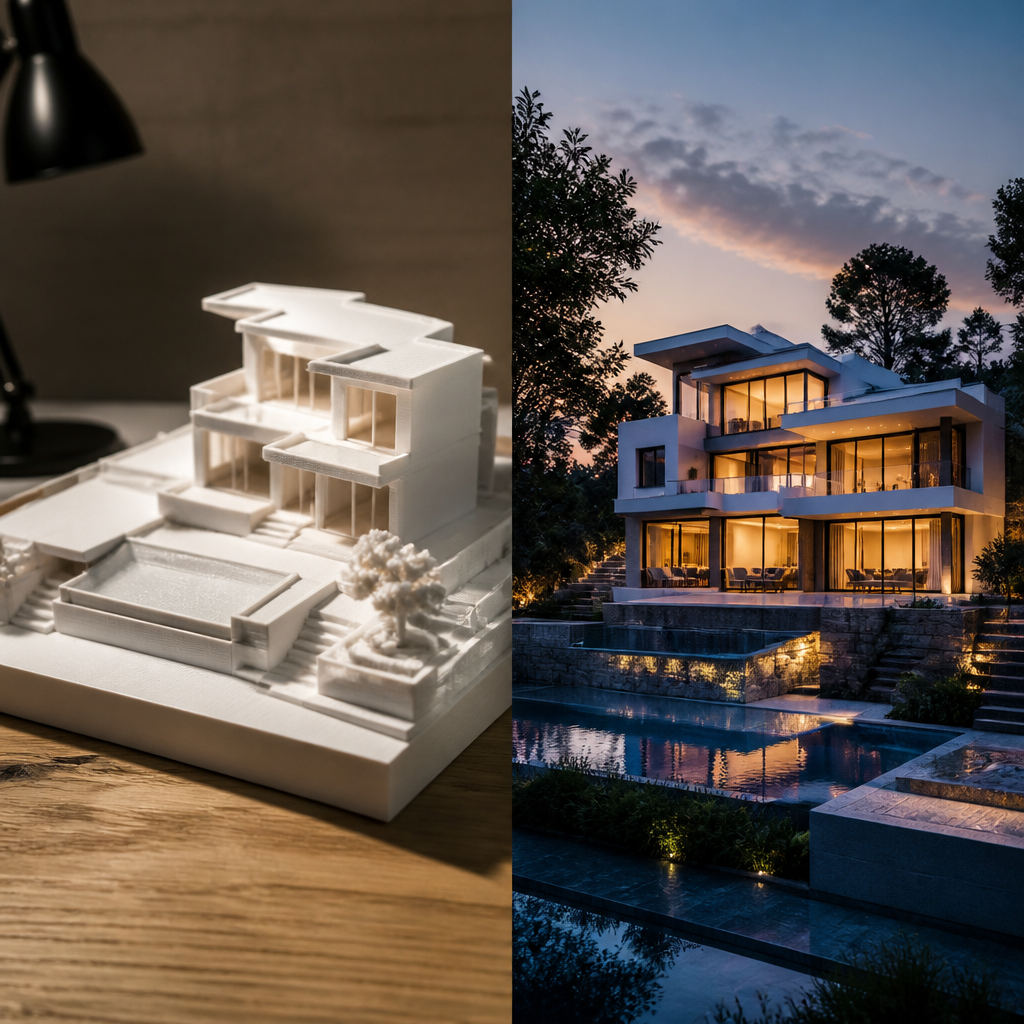
Every luxury developer I work with asks the same question at some point: do we build a physical scale model, or do we invest in a cinematic render pack? The honest answer is that they sell in very different ways, and picking the wrong one for your buyer can cost you weeks of momentum.
Here is how I actually decide with clients.
What a 3D-printed scale model does well
A physical model is a tactile object. Someone can walk around it, lean over it, point at a balcony, and instantly understand the massing, the orientation and how the building sits in its plot. For that specific job, nothing beats it.
Where I recommend a printed model:
Costs in Europe, roughly: €2,500 to €8,000 for a well-finished 1:200 residential model, €10,000 to €40,000 for a large master plan model with lighting and removable roofs. Lead time is typically three to six weeks, and revisions after printing are painful, if the facade changes, part of the model changes with it.
What photoreal 3D rendering does well
A render is a picture. Its job is to make someone feel a space before it exists. Interior light on a marble floor at dusk, a pool reflecting the sky, a view from the master bedroom, that is the emotional layer a physical model cannot deliver.
Where I recommend renders:
Pricing usually lands between €800 and €2,500 for a marketing-grade interior still, €2,500 and up for hero exteriors. Turnaround is typically five to ten working days for a full pack, and revisions are cheap by comparison, changing a stone finish is an afternoon, not a re-print.
The honest weak spots
Scale models struggle with: interior atmosphere, material realism at close range, and any change after production. They also do not scale, one model lives in one room.
Renders struggle with: conveying the whole site in one glance, and giving a buyer a sense of tactile ownership. A screen is a screen, no matter how beautiful the image.
Which one sells faster?
For luxury real estate, the pattern I see most often is that renders sell the emotional decision and the physical model closes the rational one. A buyer falls in love with a photoreal dusk shot on Instagram or in a brochure. Then they walk into the sales gallery, put their hand on the model, and the developer becomes credible.
If I had to choose one and only one, my bias for most luxury residential projects would be renders, because the majority of the buyer journey now happens on a phone screen before anyone visits anything. But that is a bias, not a rule.
A pattern that actually works
The developers with the shortest sales cycles I have worked with do all three of these:
1. A single hero physical model in the sales gallery, focused on the whole site, with clean architectural finishes and subtle interior lighting.
2. A photoreal render pack covering exteriors at three times of day and the six most important interior scenes.
3. A short cinematic flythrough (30 to 60 seconds) built from the same 3D scene as the renders, for social and paid ads.
The render pack and the flythrough are built from one production, which keeps the cost sensible. The physical model is a one-off investment that keeps earning for the full length of the sales phase.
Three questions to decide on your next project
If you are still unsure, brief both a model maker and a render studio and ask them where they would push back. A serious model maker will tell you when a render would serve you better, and a serious render studio will tell you when a physical model is going to close the deal.
Related services
Related articles
CGI vs Photography for Interior Designers: When Each One Wins
A practical comparison from someone who commissions both every week, cost, flexibility, realism, and the situations where one quietly beats the other.
5 Architectural Visualization Trends Shaping 2026
Real time engines, AI in post, VR walkthroughs and a few honest opinions on what's actually changing in archviz this year.
What Does a 3D Render Actually Cost in 2026?
The honest pricing conversation we have with clients every week, including the question of when a render isn't worth doing at all.
Got a project in mind?
Send us a few lines and we'll get back to you within a couple of days.
Get a Free Quote