5 Architectural Visualization Trends Shaping 2026
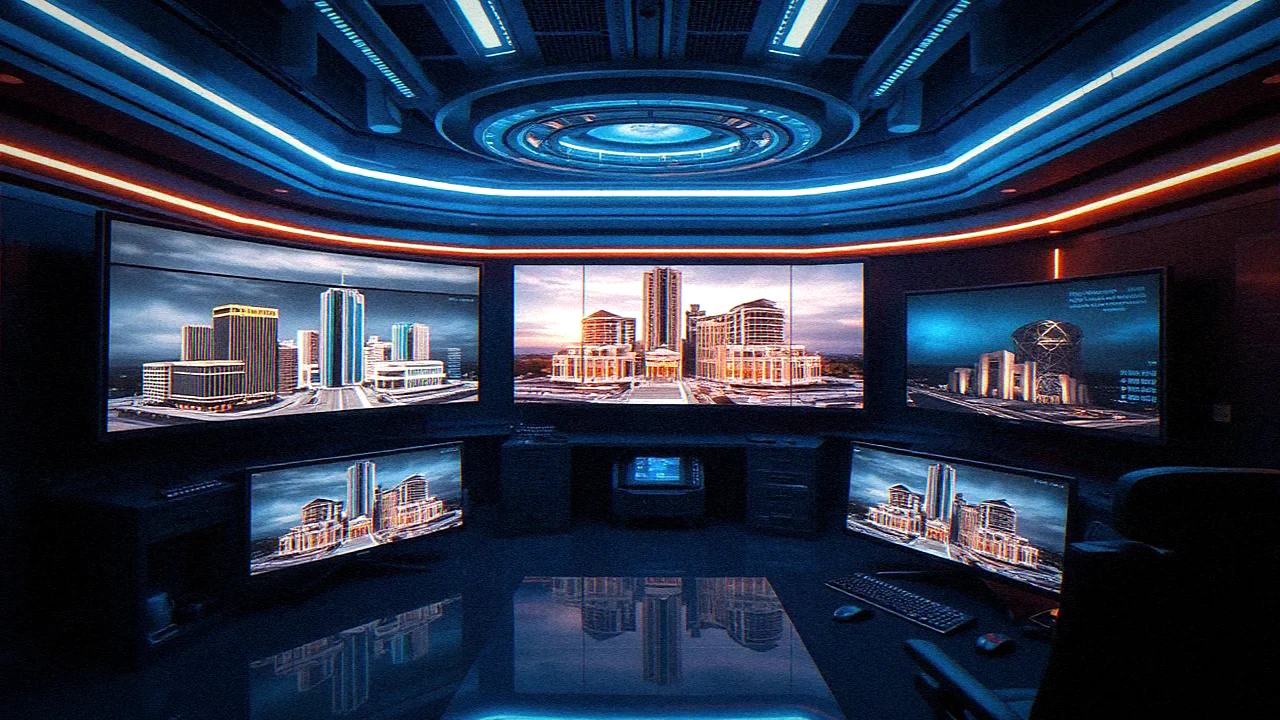
Every January, somebody publishes the year of VR. Every January, they're wrong. So I want to be careful about the word trend here. What follows is the stuff I'm actually using on real projects in 2026, not a wishlist.
1. Real-time has stopped being a gimmick
Unreal Engine 5 used to be the thing you showed clients to look forward-thinking. Now it's where a lot of our project files live from the start. The difference: you can iterate during a Zoom call. Camera angle wrong? Move the camera, the client sees it instantly, you move on.
For design reviews this is genuinely faster than the old render overnight, send tomorrow loop. For the final hero image, we still go back to a CPU pipeline, Corona for interiors, mostly, because the last 5% of quality still matters and real-time isn't quite there yet.
2. AI in post, useful, but not where people think
The AI hype around archviz is mostly noise. Generating a whole building from a text prompt is a party trick. It doesn't survive contact with a real brief.
Where AI actually earns its place in our pipeline:
What we don't let AI touch: composition, materials, lighting. Those are the decisions that make or break the image.
3. VR walkthroughs, for the projects that warrant them
VR has finally crossed the line from cool to useful, for the right project. We've shipped VR experiences for high-end residential developments where buyers were on a different continent and couldn't visit the site. In that exact context, it pulls its weight.
For a €200k apartment, it's overkill. For a €4M penthouse where the buyer wants to see before signing, it pays for itself in one sale.
4. Sustainability gets visualized, not just calculated
Clients used to ask for the building. Now they're asking for the building plus an overlay showing solar gain, plus a comparison render with and without the green roof. European building regulations are pushing this, and frankly it makes for better presentations too, design choices stop feeling arbitrary.
5. Hybrid photo-CGI is quietly everywhere
The boring trend that's saving us the most time. Got a renovation project? Photograph the existing building, drop the proposed extension in 3D on top. Got a building under construction? Real photo of the site, finished facade dropped in. Faster than full CGI, more flexible than waiting for the building to exist.
What this means if you're commissioning visuals this year
Don't ask for VR or AI by default. Ask what decision the image needs to support, then pick the tool. A clean Corona still beats a fancy real-time walkthrough nine times out of ten, as long as the brief was honest in the first place.
Related services
Related articles
3D Rendering vs 3D Printing: Which Scale Model Sells Faster?
Tactile 3D-printed scale models or cinematic photoreal renders, which one actually closes luxury real estate deals faster, and when to use both.
CGI vs Photography for Interior Designers: When Each One Wins
A practical comparison from someone who commissions both every week, cost, flexibility, realism, and the situations where one quietly beats the other.
What Does a 3D Render Actually Cost in 2026?
The honest pricing conversation we have with clients every week, including the question of when a render isn't worth doing at all.
Got a project in mind?
Send us a few lines and we'll get back to you within a couple of days.
Get a Free Quote